
"Doctor, is it time for a joint replacement?" It's one of the questions I hear most often in the office, and it almost always comes with an X-ray and a great deal of anxiety.
The answer is rarely in the image.
Joint wear doesn't hurt the same in everyone
Some patients have severe wear on their X-ray yet walk well and sleep without discomfort. Others have moderate changes on imaging and pain that is ruining their quality of life.
That's why the decision isn't made by looking at the X-ray: it's made by listening to what you can no longer do.
The questions that really decide it
In the consultation, these are the questions that carry the most weight:
- Does the pain wake you up at night? Constant night pain is one of the clearest signs that the wear is advanced.
- How far can you walk before you have to stop? When that distance shrinks to a few blocks, and then to a few yards, your world starts to close in.
- Have you already tried everything else? Medication, rehabilitation, weight management, activity modification. If none of that has helped, the conservative route has been exhausted.
- What have you stopped doing because of the pain? This is usually the most revealing one. No longer going out, no longer playing with the grandchildren, no longer working.
If several answers point in the same direction, it's probably time.
What a joint replacement does
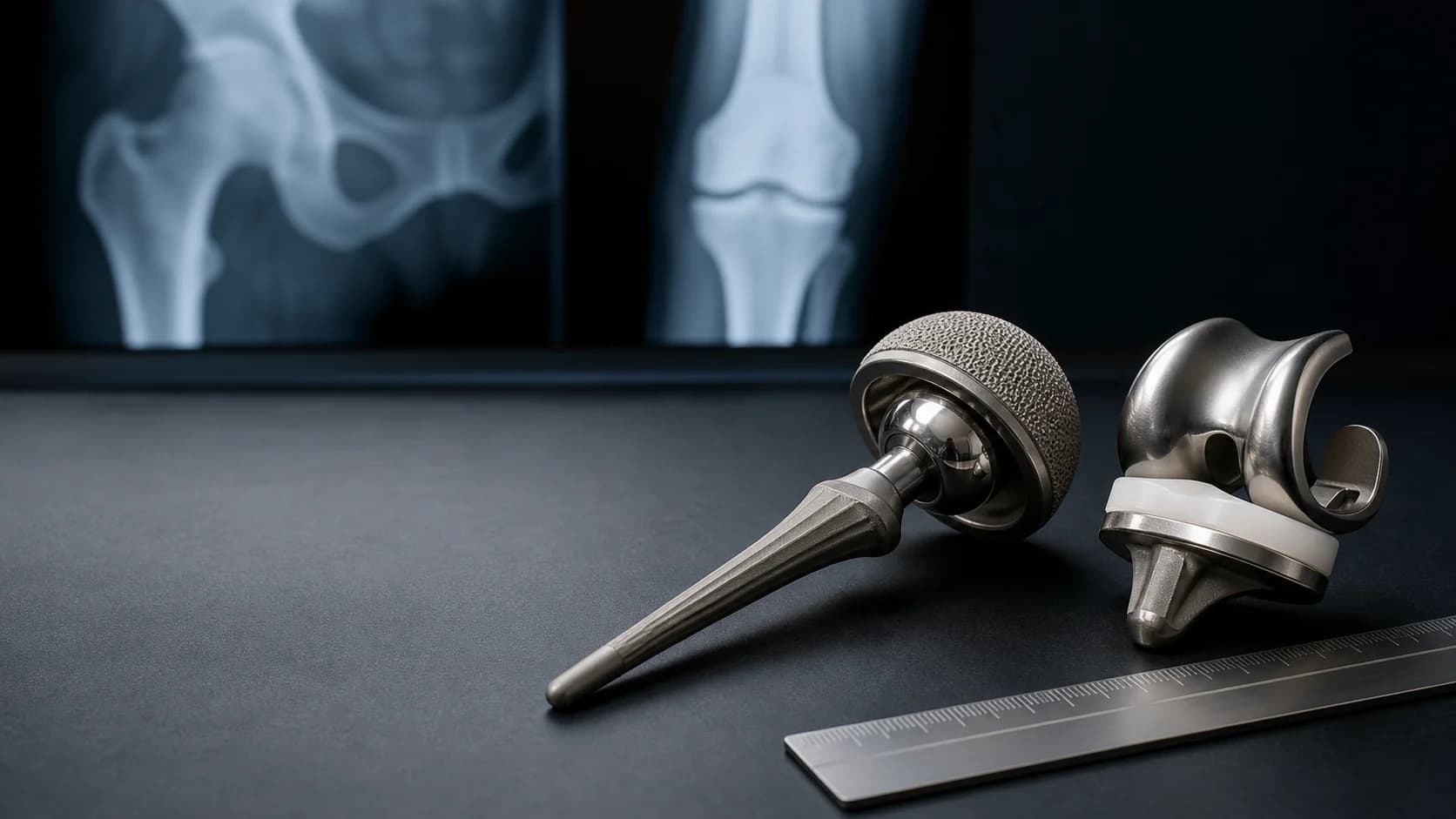
It replaces the damaged joint surfaces with components that restore normal, smooth gliding. In the knee, the surfaces of the femur and tibia are replaced; in the hip, the head of the femur and, depending on the case, the surface of the pelvis.
It is one of the surgeries with the highest satisfaction rates in all of orthopedics. The reason is simple: it relieves pain that no longer responds to anything else.
A special case: hip fracture
Here the reasoning changes completely. A hip fracture in an older adult is not an elective surgery that can be put off.
Every day the person spends confined to bed increases the risk of complications. Operating early is not a matter of convenience: it is part of the treatment, and it has a direct impact on the outcome.
If an older family member has fallen and can't put weight on the leg, they need to be evaluated right away.
Realistic expectations
This is worth saying clearly before surgery, not after:
- The main goal is to relieve the pain and get you walking again. That is achieved in the vast majority of cases.
- A replaced knee won't be identical to a twenty-year-old knee. Kneeling, for example, is uncomfortable for some patients.
- Today's implants last a long time, but exactly how long depends on your age at the time of surgery, your weight and your activity level.
- Rehabilitation determines the final result. Surgery sets up the conditions; the work that follows delivers the result.
Not too early, not too late
Operating too early exposes the patient to a surgery that might have been postponed for years, and to a possible revision surgery down the road.
Operating too late has a cost as well: going into surgery with atrophied muscles, advanced deformity and after years of inactivity makes recovery slower and the result less complete.
The ideal moment is when the pain truly limits you and conservative options have been exhausted, but before functional decline sets in.
That conversation is worth an appointment; bring your imaging and test results with you.