
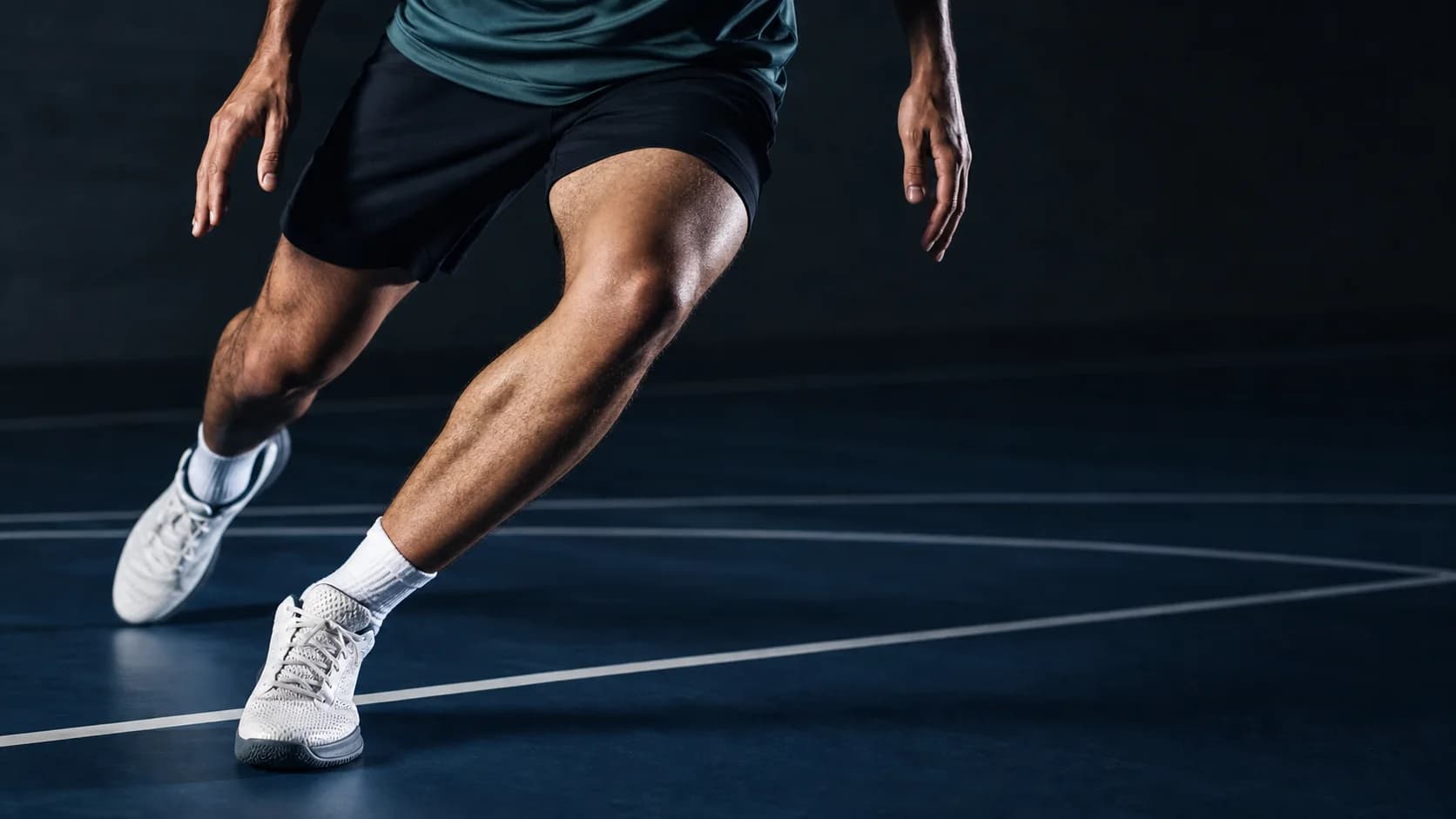
Almost every patient with an anterior cruciate ligament (ACL) tear remembers the exact moment: a twist with the foot planted on the ground, an awkward landing, a sudden change of direction. Many hear or feel a pop. The knee swells over the next few hours, and a feeling sets in that is hard to describe: the knee no longer feels reliable.
What this ligament does and why it matters so much
The ACL is the structure that keeps the shinbone (tibia) from sliding forward relative to the thighbone (femur), and it controls the rotation of the knee. In daily life — walking in a straight line, going up stairs — you can function surprisingly well without it.
The problem shows up with pivoting movements: turning, stopping suddenly, changing direction. That is when the knee "gives way," and each of those episodes of instability can damage the meniscus and the cartilage. That is the real reason to reconstruct it: it is not just about being able to play, it is about protecting the rest of the joint.
Does everyone need surgery?
No, and that surprises a lot of people. The decision depends on:
- Your age and activity level. Someone who plays pivoting sports has much more to gain from reconstruction.
- Whether there is true instability in your daily life, not just on the MRI.
- Whether there are associated injuries, especially to the meniscus.
- Your goals. Getting back to playing soccer is not the same goal as walking without discomfort.
A 55-year-old patient who walks and swims can do very well without reconstruction. A 22-year-old soccer player almost certainly needs it.
What the surgery involves
The reconstruction is done arthroscopically, through two incisions just a few millimeters long. The torn ligament is not "stitched" back together: it is replaced with a graft that is secured in tunnels made in the femur and the tibia, in the original anatomical position.
The surgery takes one to two hours, and in many cases the patient goes home the same day. Frankly, the surgery itself is the shortest part of the whole process.
Recovery is where the real work happens
It is worth being honest here: surgery is 20% of the result; rehabilitation is 80%.
The process moves in stages, and each one has a goal to reach before moving on to the next:
- Pain and swelling control. Regaining full extension is a priority from day one.
- Range of motion. A knee that does not fully straighten causes problems in the long term.
- Strength. The quadriceps atrophies very quickly after the injury and takes real effort to rebuild.
- Sport-specific movement. Running, jumping, landing, changing direction — in that order.
- Return to competition.
Why I don't give you an exact date
It is the first question every athlete asks, and it deserves an honest answer: return to sport is decided by meeting criteria, not by the calendar.
The graft needs biological time to integrate, and that time cannot be negotiated. On top of that, two patients operated on the same day can be at very different points at four months, depending on how they have worked.
Returning too soon is the number one cause of re-tears. And the second injury is usually worse than the first: harder to reconstruct, with a poorer prognosis. Gaining three weeks is not worth that.
What you can do starting today
If you have just been injured, do not wait for all the swelling to go down before getting evaluated. An early evaluation allows for better planning, and there is rehabilitation work done before surgery — regaining motion and strength — that measurably improves the final result.
A knee that goes into the operating room stiff and with an atrophied thigh recovers less well. That part is in your hands.